
- Other Name:Glutaric Dialdehyde
- Form: Liquid
- Content ≥: 25%, 50%
- CAS No.: 111-30-8
- pH: 3-5
- Molecular Formula: C5H8O2
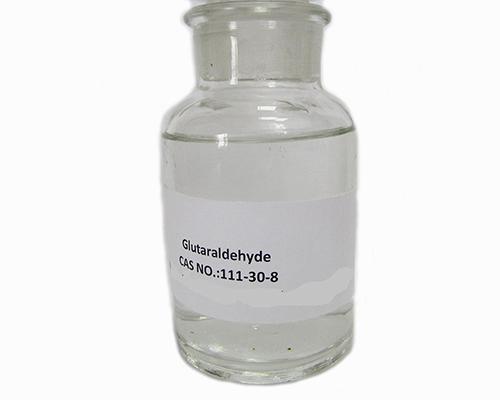
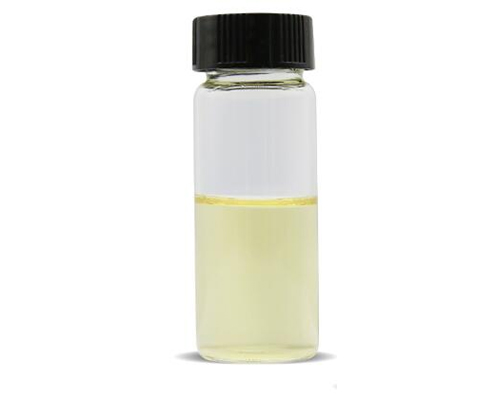
Glutaraldehyde, also known as glutaric dialdehyde, is an organic dialdehyde compound with the molecular formula C₅H₈O₂. Its chemical structure is a dialdehyde with aldehyde groups at both ends and three methylene groups in the middle. It appears as a colorless to light yellow transparent oily liquid with a slightly irritating aldehyde odor, which becomes pungent at high concentrations. Glutaric dialdehyde is miscible with water, ethanol, chloroform, ether, and many other organic solvents, and its aqueous solution is weakly acidic.
The glutaraldehyde chemical is a highly effective broad-spectrum aldehyde disinfectant and cross-linking agent with reactive chemical properties, widely used in medical, industrial, and agricultural fields.
Technical Specifications
Items | Glutaraldehyde Solution |
Appearance | 25% glutaraldehyde is a colorless liquid, while 50% glutaraldehyde is a slightly yellowish, oily, transparent liquid with a pungent, distinctive odor. |
Molecular weight | 100.12 |
Melting point | -5.8℃ |
Boiling point | 101℃ |
Density | 1.08-1.130g/cm3 |
Content | ≥25%, ≥50% |
pH | 3-5 |
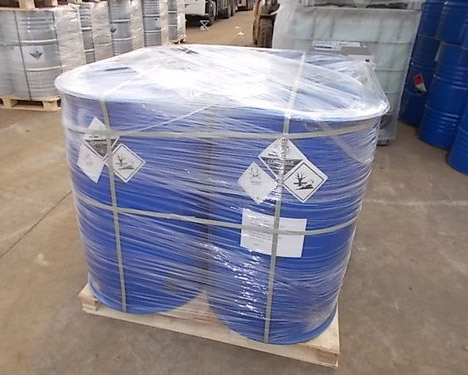
Packing | 200 L plastic drums with a net weight of 220 kg; 1,000 L IBC containers with a net weight of 1,100 kg; |
Product Characteristics of Glutaraldehyde Disinfectant
- Broad-Spectrum High Efficacy. Effectively inactivates a wide range of microorganisms, including bacteria, fungi, viruses, and bacterial spores. Its strong and reliable antimicrobial activity ensures high-level disinfection across diverse application environments.
- Suitable for Heat-Sensitive Medical Devices. Designed for medical instruments that cannot withstand high-temperature sterilization. This product is widely used for the disinfection of endoscopes, dialysis equipment, anesthesia instruments, and other precision medical devices, providing effective low-temperature disinfection without compromising device integrity.
- Low Corrosiveness to Metals. Compared with traditional strong oxidizing disinfectants, glutaraldehyde disinfectant exhibits significantly lower corrosiveness to metals. This property helps protect medical instruments from surface damage, corrosion, and material degradation, thereby extending their service life.
- Stable Performance and Extended Use Life. After alkaline activation or buffering, the glutaraldehyde solution demonstrates excellent chemical stability. It maintains effective disinfecting performance throughout its validated use period, typically 14–28 days, depending on formulation and usage conditions, allowing for repeated and cost-efficient use.
Main Uses of Glutaric Dialdehyde
1. Industrial Applications
- Water Treatment. Used as a biocide in circulating water systems and oilfield fracturing fluids, glutaraldehyde effectively removes biofilms and microbial slime. It demonstrates excellent compatibility with corrosion inhibitors and is non-foaming, ensuring stable performance in industrial water treatment processes.
- Leather and Textile Processing. Applied as a high-quality tanning agent, glutaraldehyde for sale enhances leather softness and resistance to aging. In textile applications, it is used for fiber crosslinking modification, improving fabric strength, durability, and overall performance.
- Chemical Synthesis. Serves as a raw material in polymer synthesis for the production of resins, crosslinking agents, and coatings. It is also widely used as an intermediate in various organic synthesis processes.
2. Agriculture and Aquaculture
- Livestock and Poultry Farming. Widely used as an environmental disinfectant for animal housing, transport vehicles, and farming equipment. When formulated in combination with quaternary ammonium compounds, it delivers enhanced and more comprehensive disinfection performance, effectively reducing the risk of cross-contamination and disease transmission.
- Aquaculture. Suitable for the disinfection of breeding ponds, fishing nets, and related equipment to control bacteria, fungi, and viruses. The chemical is relatively unaffected by organic matter and offers good stability in aquatic environments. However, it may have a certain impact on algae, so proper dosage control is recommended to ensure effective disinfection while maintaining ecological balance.
3. Medical and Healthcare Applications
- Medical Device Disinfection. A 2% alkaline glutaraldehyde solution is commonly used as a high-level disinfectant for the immersion sterilization of moisture-resistant but heat-sensitive medical instruments, such as endoscopes and surgical instruments. It provides a broad antimicrobial spectrum covering vegetative bacteria, bacterial spores, viruses, and fungi, with rapid and long-lasting efficacy.
- Biological and Scientific Research.Used as a protein crosslinking agent for tissue fixation and preservation of cellular specimens. It is also employed to inactivate bacterial toxins for the production of toxoid vaccines.
- Firstly, their mechanism of action. Glutaraldehyde achieves sterilization and cross-linking through protein cross-linking, while SDIC chemical relies on active chlorine oxidation for sterilization.
- Secondly, application scenarios. Glutaraldehyde is primarily used in high-end applications such as sterilization of medical precision instruments and scientific research cross-linking, while SDIC chemical focuses on low-cost applications such as large-scale water treatment and public environment disinfection.
- Thirdly, usage limitations. The product requires alkaline activation, has a short usage cycle, and is expensive, while SDIC is susceptible to organic matter, is corrosive to metals, and leaves a chlorine odor residue.
- Fourthly, physicochemical properties and storage/transportation. Glutaraldehyde chemical has poor stability and requires strict temperature control, while SDIC has strong stability and is easier to store and transport. Although both are highly effective disinfection products, their suitable application scenarios differ significantly, requiring precise selection based on specific needs.
1. For medical disinfection, instruments must be cleaned and dried before being completely immersed in a 2% alkaline glutaraldehyde solution. The container should be covered during immersion. Sterilization generally requires 10 hours, while disinfection requires 20-45 minutes.
2. After activation (adjusted to pH 7.5-8.5), the diluted glutaraldehyde solution should generally not be used continuously for more than 2 weeks.
3. Waste disposal must comply with environmental regulations. High-concentration waste liquid must be neutralized before discharge to avoid polluting water sources.
- Packaging. For industrial applications, the product is commonly supplied in 200 kg plastic drums or IBC bulk containers. For medical use, small-pack options such as 500 mL and 1 L bottles are available.
- Storage: Store in tightly sealed containers, protected from light, in a cool, dry, and well-ventilated area. The recommended storage temperature is 0–25°C. Keep away from oxidizing agents, food additives, and incompatible materials. Avoid direct sunlight and high-temperature environments. Under proper storage conditions, the typical shelf life is 24 months.
- Transportation. Transported as a general chemical product. During transportation, avoid severe impact and ensure containers remain intact to prevent leakage. Do not transport together with incompatible or prohibited materials.
Why Choose Fengbai Company?
As a leading supplier and manufacturer, Fengbai operates an annual production capacity of 60,000 metric tons of glutaraldehyde, demonstrating strong manufacturing strength and supply reliability within the industry. Supported by large-scale, continuous production facilities and a mature, stable manufacturing process, Fengbai consistently delivers glutaraldehyde products with uniform quality to global markets. This robust production capability enables the company to meet large-volume demand across medical disinfection, industrial water treatment, scientific research, and agricultural applications, while ensuring long-term supply security and dependable partnership for its customers.